Most people spend years trying to handle anxiety on their own before they ever consider getting help. There’s this whole period where you’re convinced you can figure it out yourself—reading articles, trying breathing exercises, telling yourself it’ll pass. And sometimes it does pass, for a while. But then it comes back, usually stronger, and the methods that used to work don’t seem to cut it anymore.
The shift from managing anxiety solo to working with someone who actually knows what they’re doing isn’t just about having someone to talk to. It’s a complete change in how you approach the problem.
Why Going It Alone Stops Working
Here’s what happens when you’re managing anxiety by yourself: you develop strategies based on what you think will help. Maybe you avoid certain situations. Maybe you over-prepare for everything. Maybe you’ve gotten really good at talking yourself down from panic attacks. These aren’t bad things—they’re survival mechanisms, and they prove you’re resourceful.
The problem is that most self-management strategies are about getting through the moment. They’re short-term solutions that don’t address why the anxiety keeps showing up in the first place. You might successfully avoid a triggering situation, but that doesn’t stop the next trigger from appearing. You might calm yourself down after a panic attack, but you’re still living in fear of the next one.
Over time, this creates a cycle. The anxiety happens, you manage it, you feel relief, and then you wait for it to happen again. Your life starts to shrink around what you can handle on your own. Plans get made based on whether you’ll be able to manage your anxiety in that situation. Opportunities get passed up because the thought of dealing with the anxiety on your own feels like too much.
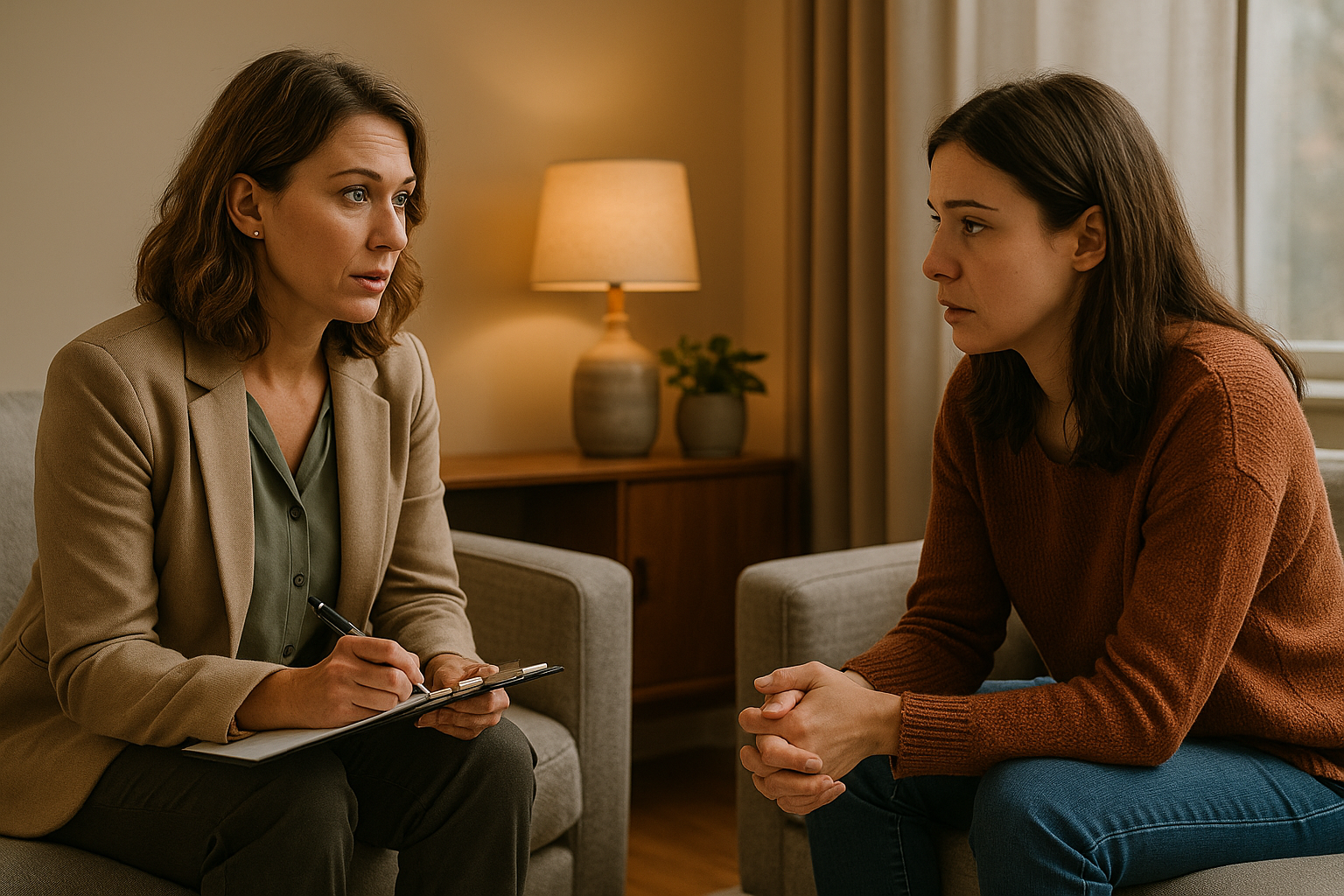
What Changes With Professional Support
When someone decides to work with an Anxiety therapist denver co, the approach shifts from management to understanding. Instead of just getting through anxious moments, there’s space to figure out what’s actually driving them. This is where the real difference shows up.
Professional treatment looks at patterns. Why does anxiety spike in specific situations? What thoughts are running in the background that you’ve stopped noticing because they’re so constant? What physical sensations are you interpreting as danger when they might be something else entirely? These aren’t questions most people can answer accurately on their own because anxiety has a way of distorting how we see things.
There’s also the accountability factor that matters more than people expect. When you’re managing anxiety alone, it’s easy to skip the practices that help when you’re feeling okay. Why do the breathing exercises when you’re not panicked? Why challenge your thoughts when they don’t seem that unreasonable in the moment? Having regular sessions creates structure that keeps you working on it even when the immediate crisis has passed.
The Relief of Not Having to Be Your Own Expert
One of the biggest shifts people notice is not having to figure everything out themselves anymore. There’s a specific kind of exhaustion that comes from constantly trying to analyze your own anxiety while you’re in it. It’s like trying to fix a car engine while you’re driving—you’re too close to the problem to see it clearly.
Professional support means someone else can see the patterns you’re missing. They can point out when you’re using a coping strategy that’s actually making things worse in the long run. They can tell you when what you’re experiencing is a normal part of the process versus something that needs a different approach. This outside perspective matters because anxiety lies, and it’s convincing.
There’s also something that happens when you stop carrying all of it alone. Anxiety thrives in isolation. The more you keep it to yourself, the bigger it gets, the more power it has over your decisions. Talking about it regularly with someone who isn’t shocked or worried or trying to fix it with simple advice changes how much space it takes up in your head.
What Actually Gets Better
The changes aren’t usually dramatic at first. Most people don’t wake up one day suddenly free of anxiety. What happens is more subtle and, honestly, more sustainable.
Response times get shorter. Instead of spending an entire day spiraling after a triggering event, you might spend an hour. Instead of canceling plans because of anxiety, you go but leave early. These small shifts add up to a life that feels less controlled by fear.
Physical symptoms often improve before the mental ones. The chest tightness eases up. Sleep gets better. Digestive issues that seemed unrelated to anxiety start to settle down. This makes sense—when you’re not in constant fight-or-flight mode, your body gets a chance to relax.
Decision-making becomes clearer. Anxiety has this way of making everything feel equally urgent and important. With treatment, it gets easier to sort out which concerns are worth attention and which are anxiety talking. This doesn’t mean all worry disappears, but it means you’re not letting anxiety make all your choices anymore.
The Long-Term Difference
Here’s what people don’t always realize about getting professional help for anxiety: it’s not just about feeling better right now. It’s about learning to handle anxiety differently for the rest of your life. The tools and insights you gain don’t expire when treatment ends.
Most people who get help for anxiety don’t stop experiencing it entirely. What changes is their relationship with it. Instead of anxiety being this overwhelming force that controls everything, it becomes something manageable—annoying, sometimes frustrating, but not life-stopping.
The difference between white-knuckling through anxiety on your own and having professional support shows up in how much energy you have for the rest of your life. When you’re not spending all your resources just managing your symptoms, there’s room for other things. Relationships improve. Work becomes less overwhelming. Plans get made without the constant mental calculation of whether anxiety will allow it.
Getting help doesn’t mean you failed at managing it yourself. It means you recognized that some things are harder to handle alone, and that there are people with training and experience who can make the process easier. That’s not weakness—it’s actually one of the smarter decisions someone with anxiety can make.